Burst Pipe Water Damage in Bellingham, MA
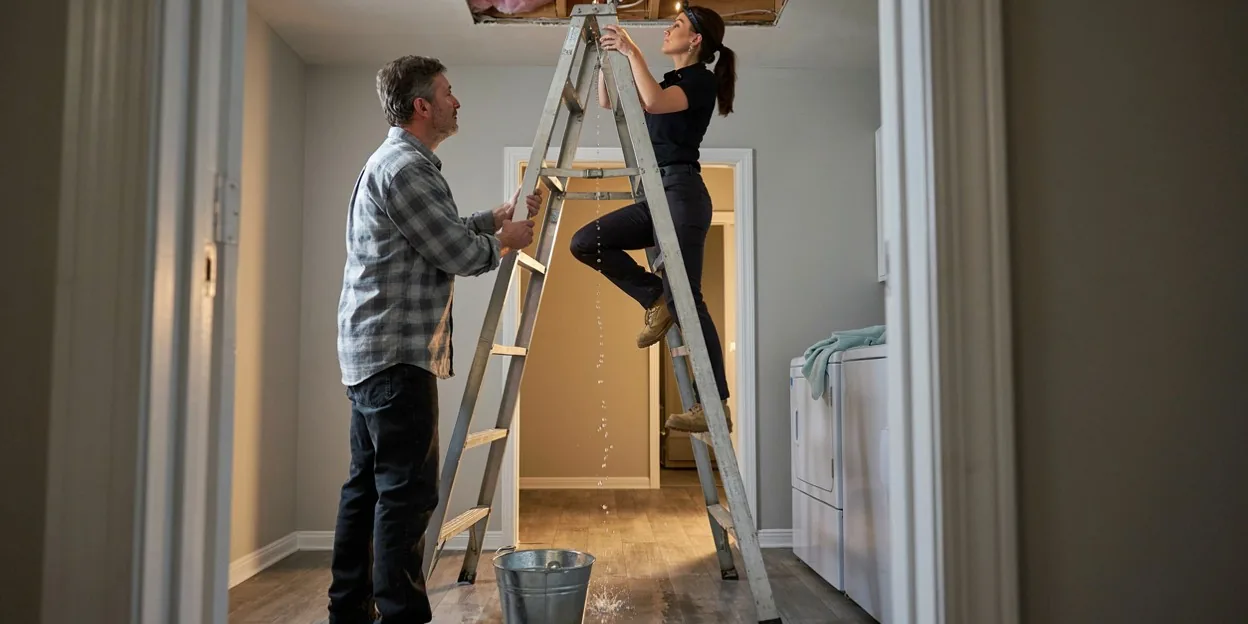
You heard it before you saw it, a hiss behind the kitchen wall that turned into water running out from under the baseboard. By the time you found the main valve in the basement, the kitchen floor was wet, the ceiling of the family room below had a stain the size of a table, and water was dripping off the light fixture. Call us now and tell us what you see. We connect you with an independent local provider who handles burst pipe water damage in Bellingham and across Norfolk County.
What the crew does first
The crew confirms the water is off and works out how long it ran. A half-inch supply line under house pressure moves a lot of water in an hour, and the time between the break and the shutoff sets the size of the job. Then they extract the standing water and follow the path: down through the floor, along the joists, into the ceiling below, and down the wall cavities to the basement.
They meter each room the water touched, not just the one where it started. A pipe that broke in a second-floor bathroom in a colonial usually means a wet first-floor ceiling and a wet basement wall as well. The readings show which ceilings get opened and which walls get drying equipment through small holes instead of a full removal.
What to do in the next hour
Shut the water off at the main valve. In most Norfolk County homes it is on the basement wall where the line comes through the foundation. If you are on a well, the breaker for the pump is your shutoff. Once the water is off, open the lowest faucet in the house to drain the pressure out of the lines so the break stops dripping.
If a ceiling is sagging, stay out from under it and do not poke it. If water reached a light fixture or an outlet, cut the breaker for that room from a dry spot. Move furniture and rugs out of the wet rooms. Take photos of the ceiling, the walls, and the floor before anything is pulled down. Then call us. Fixing the pipe is a plumber's job. Drying the house is the cleanup crew's job, and the two often work the same day.
What is usually saved and what is not
Framing, joists, and subfloor usually dry in place if the crew reaches them within a day or two. Hardwood on the first floor is the question mark; caught early it can often be dried with mats, and the crew meters it before anyone pulls a board. Plaster ceilings in older homes hold up better than drywall, but a sagging drywall ceiling comes down.
Wet insulation in a ceiling or wall almost always comes out, since it holds the water against the framing. Cabinet bases and laminate floors in the room where the break happened usually go. Once the wet materials are pulled, structural drying is the rest of the job. If nobody was home when it happened and the pipe froze first, read about frozen pipe cleanup, because the timeline changes what the crew looks for.
Norfolk County notes
Most of the housing between Bellingham and Dedham went up between the 1950s and the 1990s, and the plumbing is a mix. Copper from the 1960s pinholes where it was bent or where it touches a steel hanger. Polybutylene from the 1980s and early 1990s fails at the fittings. The 1800s mill housing along the Charles in Medway and Millis and along the Blackstone has been replumbed in pieces, and a fitting between old and new pipe is a common failure point.
Two-story colonials and split-levels put the bathrooms over the living space, so a supply break upstairs becomes a ceiling loss downstairs and a basement loss after that. Water heaters in Massachusetts basements also fail from the bottom, and the puddle looks like a burst pipe until someone checks the tank. If you cannot find the source of the water, leak detection finds it before anyone opens the wrong wall.
Many homeowner policies cover a burst pipe as a sudden loss. The resulting mold can be capped, and a pipe that froze in an unheated house may be handled differently. Nobody on this site can tell you what your policy will pay. Ask the crew to record when the water was shut off, the readings on the first visit, and the photos.
Calling about burst pipe water damage
Tell us where the pipe broke, whether the water is off, and roughly how long it ran. Say which rooms are wet, whether a ceiling is sagging, and whether a plumber is already on the way. Call (508) 570-0957.