Leak Detection in Bellingham, MA
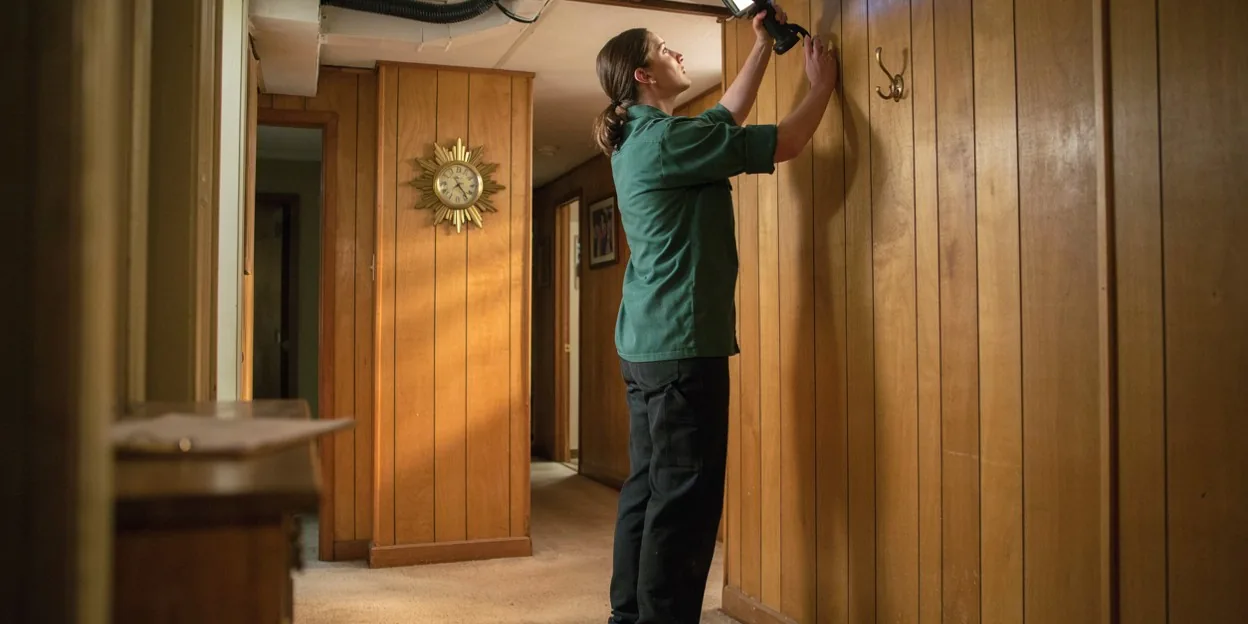
There is no puddle. There is a soft spot in the drywall behind the downstairs toilet, a musty smell in the hall closet that shares a wall with it, and the well pump in the basement kicks on every twenty minutes even when nobody is running water. Something is leaking somewhere. Call us now and tell us what you notice. We connect you with an independent local provider who does leak detection in Bellingham and across Norfolk County.
Watch the water meter, or listen for the well pump
The crew starts with the meter or the pump. On town water they watch the meter with every fixture off; if it moves, water is going somewhere. On a well they listen for the pump cycling with the house quiet, and check whether the pressure tank holds pressure with the pump breaker off. Either test says whether the leak is on the supply side before anyone looks at a wall.
Then they narrow it down. A moisture meter finds the wet drywall, a thermal camera shows where a hot line is warming a floor or a cold line is cooling a wall, and acoustic gear picks up the hiss of a pressurized leak inside a cavity or under a slab. The point is to open one small hole in the right place instead of three big ones in the wrong ones. Once they find it, a plumber makes the repair and the same visit tells you what got wet along the way.
Check the toilet flapper before anyone cuts drywall
Shut off the fixtures you suspect at their own valves and see whether the sound or the pump cycling stops. Check the toilet tanks for a running flapper, because that is the cause of a mystery water bill more often than a pipe. Look under sinks, behind the washer, and around the water heater for a drip.
If you find wet drywall or a soft floor, do not cut into it yet. Take photos of the stain and note when it appeared and whether it grows after showers or laundry. Then call us and describe what you see and hear.
Where hidden leaks live in a Norfolk County house
Supply lines in exterior walls, especially behind bathtubs on the cold side of the house. Drain lines under a first-floor bathroom that show up as a stain on the basement ceiling. The line from the well to the house, which runs underground and leaks into the yard with no sign but a pump that never rests. Water heater tanks that rust through at the bottom. Refrigerator ice-maker lines that run under the kitchen floor.
Once the leak is found and repaired, the wet materials are treated like any other water loss. Wet insulation comes out, framing dries in place, and the drywall is metered to see how much has to go. Structural drying handles what the leak soaked. If the crew finds a slow leak has been running for months, the rooms around it may need water extraction as well as drying.
Finding a leak on a private well in Dover or Wrentham
Private wells change the leak-detection problem. Dover has no municipal water system at all, and Wrentham, Franklin, Norfolk, and parts of Bellingham have whole neighborhoods on wells. There is no meter to watch and no street pressure to lose. A leak on the house side of the well shows up as a pump that cycles constantly, a pressure tank that will not hold, or a wet spot in the lawn in August. Left alone it burns out the pump.
The plumbing itself is a mix of eras. The 1960s ranches and colonials have copper that pinholes at bends and hangers. The 1980s and 1990s houses in Franklin and Wrentham may have polybutylene, which fails at the fittings. The 1800s mill housing along the Charles in Medway and Millis and the older centers of Dedham, Walpole, and Hingham have been replumbed in pieces over a century, and the transitions are where leaks live.
Slow leaks are the ones insurance treats differently. Many policies cover the sudden break but exclude damage from a leak that ran for weeks, and the mold that follows is often capped. Nobody on this site can tell you what your policy says. Finding the leak sooner is the one thing that helps on both counts. Ask the crew for photos of the source and readings of everything it reached.
When you call about a leak nobody can find
Tell us what you see and hear: the stain, the smell, the sound of water, the pump that will not stop, or the bill that jumped. Say whether the house is on town water or a well and whether anything has been opened up yet. Call (508) 570-0957.