Basement Flooding Cleanup in Bellingham, MA
It rained for two days on top of a foot of melting snow, and this morning the basement has three inches of water across the whole floor. The pump is running, but it is not winning. The water is coming in at the crack along the back wall and up through the floor drain, and the kids' playroom carpet is floating at the edges. Call us now and tell us what you see. We connect you with an independent local provider who handles basement flooding cleanup in Bellingham and across Norfolk County.
What the crew does first
The crew figures out where the water is coming from before they pump, because pumping a basement while the water table is still above the slab just refills it. If it is groundwater, they extract what they can and set up to keep extracting as it comes in. If a floor drain is backing up, they treat the water as sewage and handle it with protective gear and containment.
Then they meter the walls. In a finished basement the water gets behind the drywall and into the insulation against the block wall, and it wicks up the studs. They pull the baseboard and check the bottom of the wall in several spots, look behind the paneling, and lift a corner of the carpet to see the pad. That map decides what comes out and where the drying equipment goes.
What to do in the next hour
Stay out of the water if it has reached an outlet, the furnace, the water heater, or the panel. If the panel is upstairs or in a dry spot, cut the breakers to the basement. Do not try to unplug things while standing in water. If the sump pump has quit and you have a safe way to plug it in elsewhere or run a backup, do that.
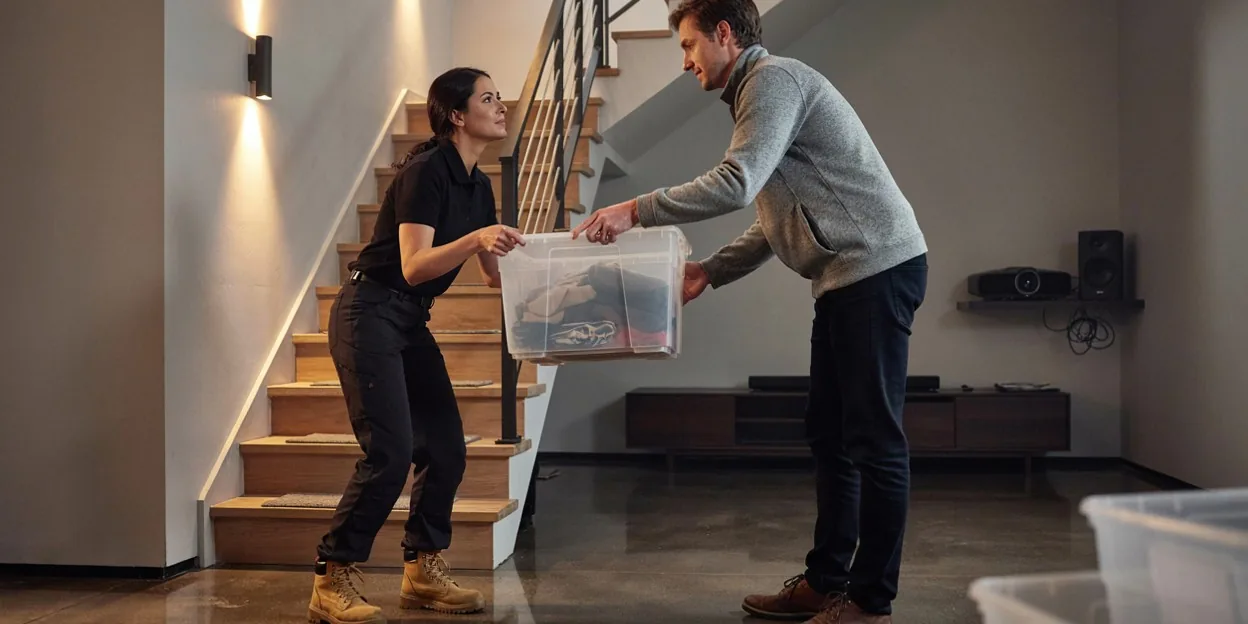
Carry up what you can. Photos, papers, and anything sentimental first. Take pictures of the water line on the walls and the contents before anything moves. Then call us and say whether the water is still rising.
What is usually saved and what is not
The slab, block walls, and framing dry in place. Contents that were on shelves above the water line are fine. Furniture with solid wood legs can often be dried. Carpet pad, cardboard boxes, particleboard furniture, and anything upholstered that sat in groundwater usually go, because groundwater is not clean.
The bottom section of the drywall along the wet walls usually comes out, along with the insulation behind it, and the framing is dried and treated before anything is closed up. Ask what reading supports each removal. Once the water is out and the wet materials are pulled, structural drying is the rest of the job. If the flood started because the pump failed rather than because the ground gave up, sump pump failure cleanup describes that loss.
Norfolk County notes
Bellingham was built on swamp and mill ponds along the upper Charles River, and the town's own planning documents describe drawing water from both the Charles and Blackstone River aquifers. That is good news for the wells and bad news for the basements. In a wet March the water table rises above the slab in the low neighborhoods, and the 1960s colonials and split-levels that make up a third of the town's houses were not built with the drainage a modern foundation gets.
The March 2010 floods are the ones people here still measure by. Three storms in a month put Boston over fourteen inches of rain, set a record on the Charles at Waltham, and pushed the Neponset in Norwood to major flood stage. Millis, Medfield, Norfolk, and Medway along the Charles all had basements that stayed wet for weeks. The lesson from that spring was that pumping is not drying; the walls that were left closed grew mold by May.
Groundwater seepage and surface flooding are excluded from most standard homeowner policies, and sump pump failure often needs its own endorsement. Nobody on this site can tell you what your policy says. Ask the crew to photograph the water line and log the readings so the record exists either way.
Calling about basement flooding cleanup
Tell us whether the water is still rising, whether it came through the walls, up through the floor, or out of a drain, and whether the sump pump is running. Say if the basement is finished and roughly how deep the water is. Call (508) 570-0957.